Enhance Your Marketing Strategy by Leveraging 5 Key Google Analytics Reports
To cultivate effective marketing strategies that truly resonate with audience behaviour, it’s essential to harness the power of Google Analytics 4 (GA4). Although the interface and terminology of GA4 might appear daunting for beginners, acquiring a solid understanding of its capabilities can unlock critical insights into customer interactions. By mastering the features and data provided by GA4, you can uncover essential insights regarding your customers’ preferences and behaviours, allowing for the effective optimisation of your marketing initiatives. Let’s delve into five crucial GA4 reports that will significantly enhance your marketing strategies and lead to improved outcomes.

1. Traffic Acquisition Report: Identify Your Most Effective Traffic Sources
Have you ever thought about the origins of your website traffic? The Traffic Acquisition report serves as a powerful tool for answering this vital question. This insightful report breaks down the various channels that bring visitors to your site, highlighting key marketing avenues such as organic search, paid advertising, social media, and referrals. Understanding these channels is essential for any marketing strategy that aims to enhance visibility and increase conversion rates.
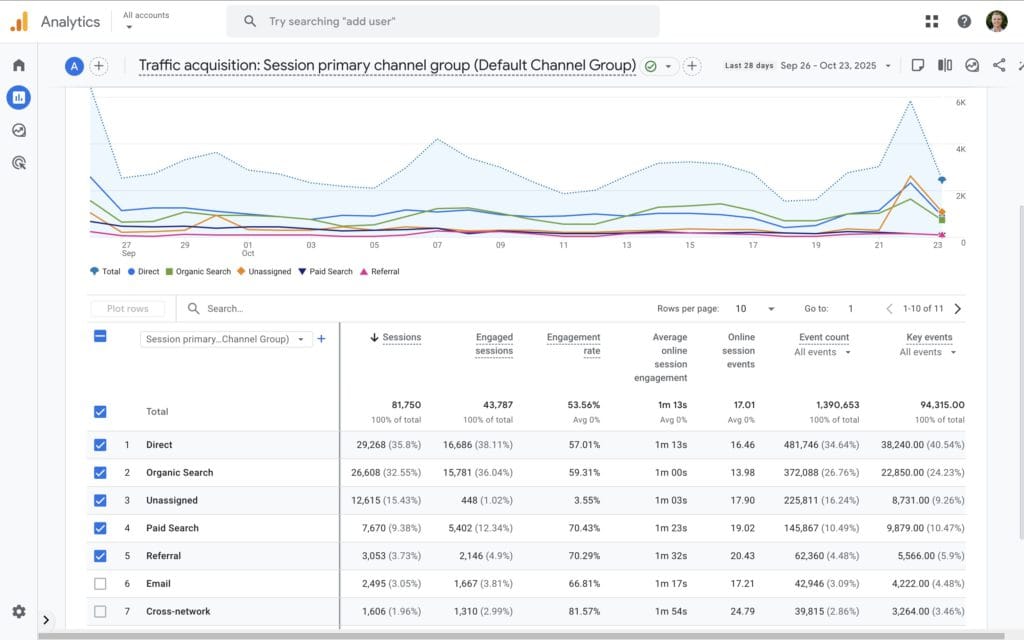
How to Effectively Utilise the Traffic Acquisition Report:
- Identify Your High-Performing Channels: Conduct an analysis to pinpoint which platforms generate the highest volume of visitors to your site. If organic search stands out as a leading channel, consider enhancing your investment in SEO strategies to further boost traffic.
- Evaluate Traffic Quality: Look beyond simple visitor numbers; assess metrics like sessions per user and average engagement time to gain a deeper understanding of genuine visitor interest and intent.
- Optimise Your Marketing Budget: Strategically allocate your budget to the channels that not only draw visitors but also engage them effectively, ensuring a higher return on investment.
By understanding where your audience originates, you can adjust your marketing focus to prioritise the channels that yield the best results. The report automatically highlights various methods through which users discover your website; however, enhancing its accuracy by tagging your inbound marketing campaigns is vital. This customisation is particularly beneficial when sending newsletters or executing advertising campaigns designed to drive traffic to your site.
Enhance Your Google Analytics Tracking with Campaign Tagging URLs
Campaign-tagged URLs are specially crafted links to your website that include additional tracking information known as query parameters. These parameters enable Google Analytics to monitor your marketing efforts with unmatched precision. By appending these parameters to your URLs, you gain access to comprehensive insights regarding how visitors navigate to your site, providing data that goes beyond the default reports.
What Are the Advantages of Using Campaign Tagging URLs?
- Track Individual Marketing Campaigns: These URLs allow you to identify which specific marketing campaigns successfully drive traffic to your website, offering clarity on your marketing effectiveness.
- Understand Your Traffic Sources: Gain insights into the origins of your visitors, whether they arrive from a newsletter, social media post, or a paid advertisement.
- Measure the Effectiveness of Campaigns: By analysing data from tagged URLs, you can pinpoint your most successful campaigns and adjust your strategy accordingly to maximise impact.
How Do Campaign Tagging URLs Improve the Acquisition Reports?
By default, Google Analytics categorises traffic sources into broad categories such as organic search, direct, referral, and organic social. While this categorisation provides a foundational understanding, it often lacks the granularity required to extract insights into specific campaigns or links. Campaign tagging URLs deliver a more detailed view, enabling enhanced tracking and analysis.
How to Implement Campaign Tagging in Your URLs?
To effectively utilise campaign-tagged URLs, you must append specific parameters to your inbound links. The essential parameters include:
- utm_source – identifies the source of your traffic, such as a newsletter, Facebook, or Google.
- utm_medium – specifies the marketing medium, whether it be email, social media, or cost-per-click (CPC).
- utm_campaign – denotes the specific campaign name, such as ‘spring sale’ or ‘product launch’.
- utm_term (optional) – primarily used for paid search campaigns to identify specific keywords related to your ads.
- utm_content (optional) – differentiates similar content or links within the same advertisement or campaign for more precise tracking.
For instance, here is an example of a Tagged URL:
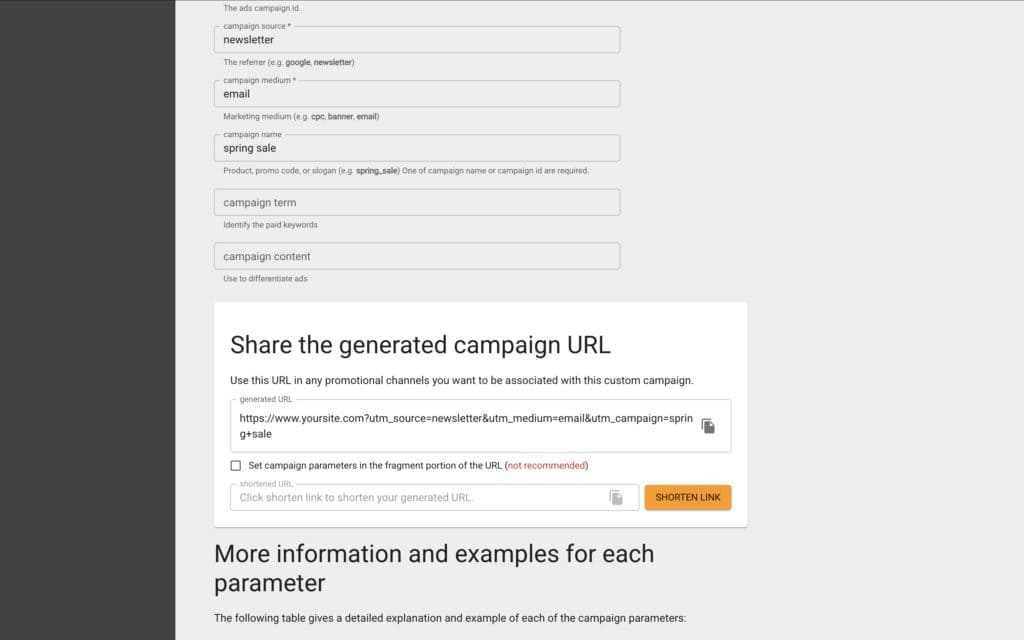
When a user clicks this tagged link, Google Analytics records the parameters, allowing you to ascertain that the visitor originated from your “spring sale” campaign via an email newsletter. By refining your inbound links with campaign tags, you can accurately track how users discover your website and their levels of engagement.
In addition to creating campaign-tagged URLs, linking your Google Ads account with Google Analytics is also beneficial. You can access a tutorial video to guide you through this process:
2. Engagement Reports: Gain Insight into User Interaction on Your Website
Attracting traffic to your site is just the beginning. The Engagement Reports provide essential insights into user behaviour once they arrive on your site. Do they linger and explore your content, or do they exit promptly? Which pages hold their attention the longest?
Within the Engagement section, the Pages and Screens report compiles data on all the pages users have accessed on your website. This report is instrumental in identifying your most and least engaging content. Key metrics to observe include:
- Views: The total number of views your pages have received, allowing you to quickly identify content that resonates with users and drives interest.
- Views Per Active User: This metric reveals which content users find compelling enough to revisit, indicating sustained interest or value in your offerings.
- Key Events: Track significant actions on specific pages, such as purchases, sign-ups, or other conversions. Configuring key events allows you to assess how effectively particular pages drive user actions and contribute to your business objectives.
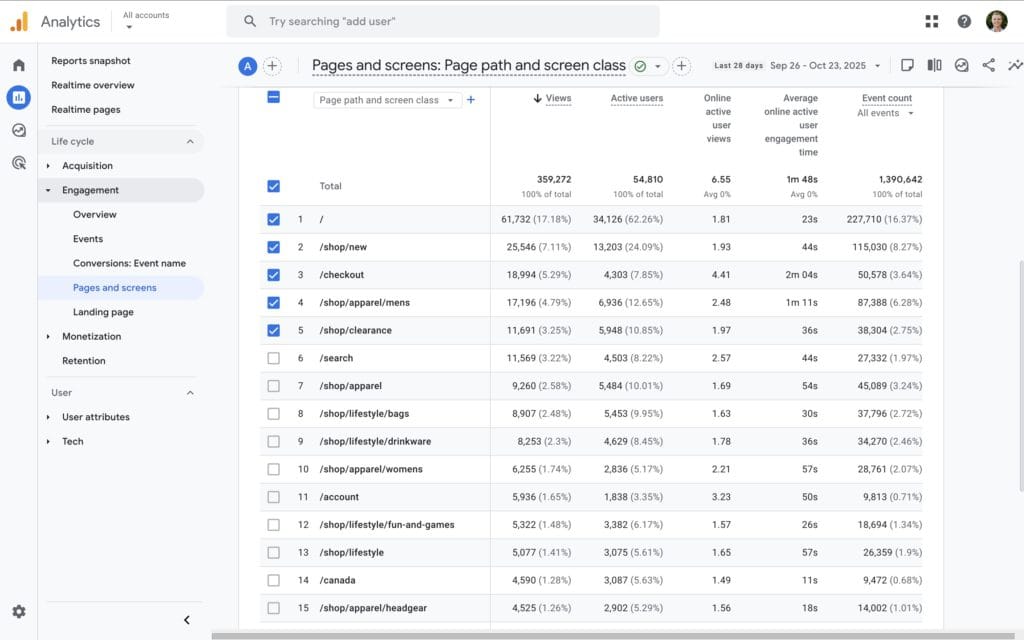
Utilise These Insights to Improve Your Website:
- Enhance High-Performing Content: If certain blog posts or product pages are excelling, consider creating additional similar content to capitalise on that interest and drive even more engagement.
- Improve Low-Engagement Pages: Identify pages with high bounce rates and implement necessary adjustments to boost engagement, such as clearer calls to action or more captivating visuals to draw in your audience.
- Personalise User Experience: Ensure that your website’s navigation is intuitive and that the content is relevant to encourage visitors to explore further and engage with your offerings.
Prioritising user engagement is crucial; your goal is not solely to increase page views but to forge connections that convert visitors into leads and customers for your business.
3. Funnel Exploration Report: Visualise and Optimise the User Journey
Understanding how users navigate your website is vital for improving conversion rates. The Funnel Exploration report in GA4 allows you to visualise the steps users take to achieve specific goals, such as completing a purchase or subscribing to a newsletter. This report helps you identify where users abandon the conversion process, providing insights on how to enhance each stage to improve the overall user experience.
Steps to Create a Funnel Exploration Report in GA4:
- Navigate to the ‘Explore’ section of GA4.
- Click ‘Blank’ to initiate a new report.
- Select ‘Funnel Exploration’ from the drop-down menu under ‘Technique’.
Step 2: Define Your Funnel Steps
- Click the pencil icon next to ‘Steps’ to outline your funnel.
- Add a step for each stage in your user journey and assign it a clear name (e.g., ‘Visited Homepage’, ‘Viewed Product’, ‘Added to Cart’, ‘Completed Purchase’).
- For each step, select the event or page view that corresponds to that action.
For example:
- Visited Homepage: Event name equals ‘page_view’ where page path equals ‘/’.
- Viewed Product: Event name equals ‘view_item’.
- Added to Cart: Event name equals ‘add_to_cart’.
- Completed Purchase: Event name equals ‘purchase’.
- After defining all steps, click ‘Apply’.
Step 3: Customise Your Funnel (Optional)
- Choose between an ‘Open Funnel,’ allowing users to enter at any step, or a ‘Closed Funnel,’ where users must start from the first step.
- Set an optional timeframe for how long users have to complete the funnel.
- Add filters to focus on specific user criteria if necessary.

Maximise the Value of This Report By:
- Optimising Conversion Steps: Analyse each stage of the funnel to identify opportunities for improvement. If a significant number of users exit at a specific step, consider simplifying the process or providing additional guidance to help them along.
- Enhancing User Experience: Leverage insights from the funnel report to create a more intuitive user journey. This may involve redesigning pages, enhancing load times, or refining calls to action to better engage users.
- Testing and Iterating: Conduct A/B tests throughout funnel stages to identify which changes yield higher conversion rates. Continuous testing helps refine the process over time and ensures your funnel remains effective.
- Personalising Content: Tailor the user experience based on segment behaviour. For instance, if mobile users exit at a particular point, optimise that step for mobile devices to improve retention.
Utilising the Funnel Exploration report empowers you to create a streamlined and efficient path to conversion. By identifying and addressing weaknesses within your funnels, you can refine the process and effectively guide users towards your desired outcomes.
4. Demographic Details Report: Gain Comprehensive Insights into Your Audience
The Demographic Details report provides invaluable insights into your audience’s age, gender, location, and interests. This data is essential for assisting you in tailoring your content and marketing campaigns to connect more effectively with your audience, ultimately driving higher engagement and conversion rates that bolster your business.
Key Insights from the Demographic Report:
- Age and Gender Analysis: Discover the age ranges and gender distribution of your audience to tailor your messaging to better suit their preferences and needs.
- Geographic Distribution: Identify the geographic locations of your users to enhance regional marketing efforts and time your campaigns more effectively according to local trends.
- Interests and Affinity Categories: Understand your users’ interests beyond your website to create more engaging and relevant content that attracts and retains their attention.
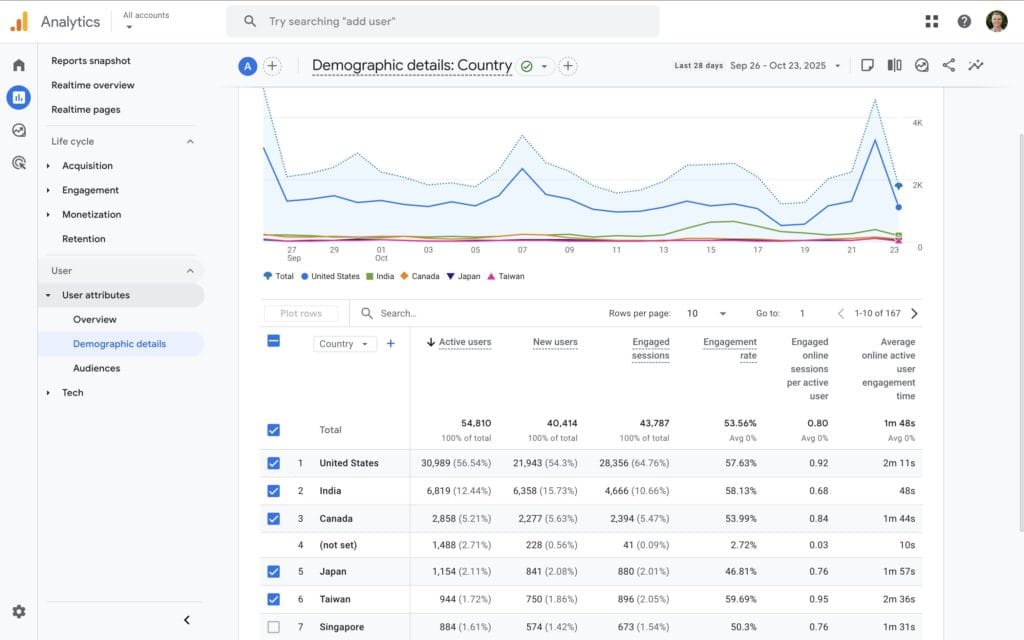
Effective Strategies Derived from Demographic Insights:
- Personalise Your Content: Craft your content and marketing messages to align seamlessly with the preferences of your primary demographic segments for greater impact.
- Implement Targeted Advertising: Utilise demographic data to refine your ad targeting, ensuring your promotions reach the most receptive audience for optimal results.
- Expand Your Market Reach: Identify underrepresented demographics that present growth opportunities and develop strategies to engage these potential users effectively.
By focusing on demographic insights, you can create marketing campaigns that are more effective and relevant, connecting with your audience’s specific needs and preferences to drive engagement.
5. Monetization Report: Discover Valuable Insights into Your Revenue Streams
For websites that generate revenue, the Monetization reports are indispensable. These reports provide a comprehensive overview of how users contribute to your financial success, empowering you to make informed decisions regarding your marketing strategies and revenue generation efforts.
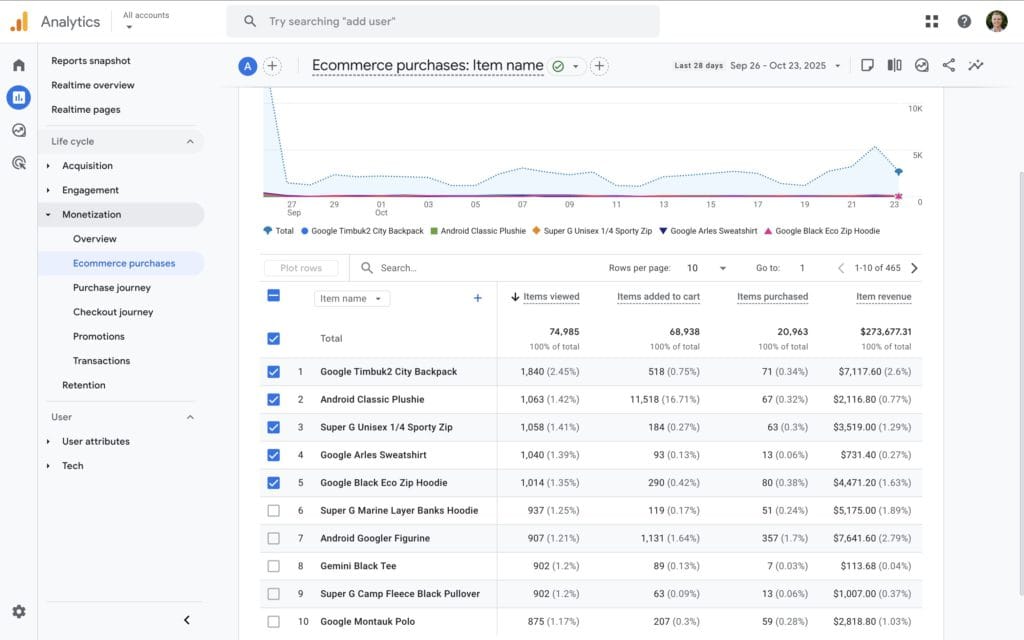
Essential Metrics to Monitor for Revenue Insights:
- Total Revenue: The cumulative income generated over a specific period, providing a clear picture of your business’s financial health.
- Average Purchase Revenue: The average revenue generated per transaction, helping you understand pricing effectiveness.
- Purchases: Track the frequency and types of products or services sold to gain insights into customer preferences and behaviours.
Utilise This Data to Boost Your Revenue Streams:
- Identify Your Best-Selling Products: Concentrate your marketing efforts on products that generate the highest revenue to maximise profitability and growth.
- Enhance Product Promotion: Increase the visibility and attractiveness of your products to drive sales and boost overall revenue through strategic marketing.
- Leverage Upselling and Cross-Selling Opportunities: Use purchasing data to recommend complementary products, thereby increasing the average order value for your business and enhancing customer satisfaction.
A thorough understanding of your monetisation metrics empowers you to make informed decisions that significantly enhance profitability and drive sustainable business growth.
Take Action to Master Google Analytics for Enhanced Marketing Success
By familiarising yourself with these five pivotal GA4 reports, you are laying the groundwork for marketing success rooted in data-driven insights. When you feel ready to deepen your expertise in Google Analytics, consider enrolling in a Google Analytics 4 Course to learn how to leverage these reports effectively and maximise the utility of this vital business tool.
It is important to remember that successful marketing is not just about attracting visitors; it also involves understanding their needs and behaviours. Utilise the reports discussed above to gain deeper insights into your audience, refine your strategies, and watch your marketing initiatives thrive.
The post 5 Google Analytics Reports Every Marketer Should Know About appeared first on Ezi Gold.
The Article Google Analytics Reports Every Marketer Must Know Was Found On https://limitsofstrategy.com
The Article Essential Google Analytics Reports for Every Marketer First Appeared ON
: https://ad4sc.com